Widows Sons - Privateers
The Golden Age of Guernsey Privateers
For nearly 150 years, Guernsey folk found an unusual way to make a very good living: privateering, essentially legal piracy during wartime. From the late 1600s through the Napoleonic Wars, this small Channel Island became a thriving hub of licensed sea raiders, with local ships preying on enemy commerce and hauling home immense riches.
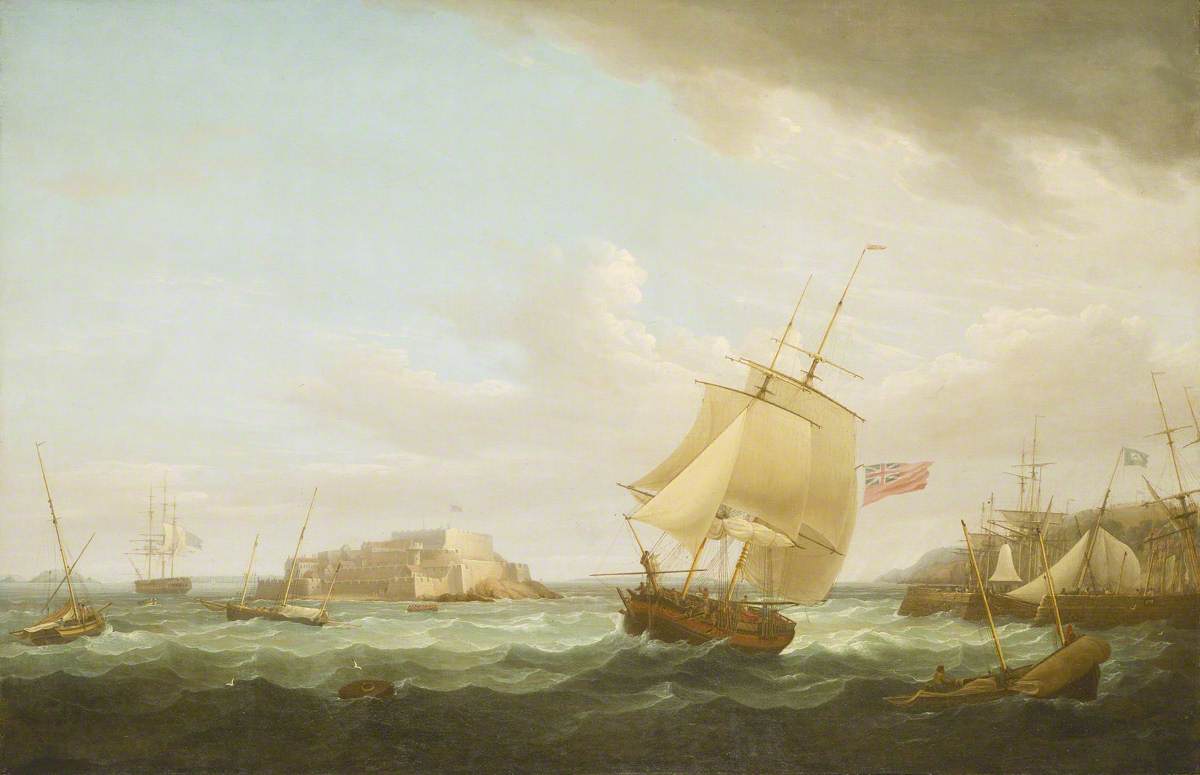
Guernsey’s privateering tradition sprang from its unique position between England and France. For centuries the Channel Islands were officially neutral in Anglo-French wars (thanks to old royal edicts and even a Papal Bull of 1483), meaning islanders could sit out conflicts. That changed in 1689 when King William III revoked the neutrality at the outbreak of war with France. Suddenly, Guernsey ships were free – indeed encouraged – to attack French vessels. Islanders wasted no time. They obtained Letters of Marque (government licenses to private ship owners allowing them to capture enemy ships legally) and fitted out their fastest vessels with guns. Thus began Guernsey’s era of privateering. (Historical footnote: even earlier, in 1590s, Queen Elizabeth I had quietly allowed some Guernsey mariners to harass French shipping. But 1689 marked the official embrace of privateering.)
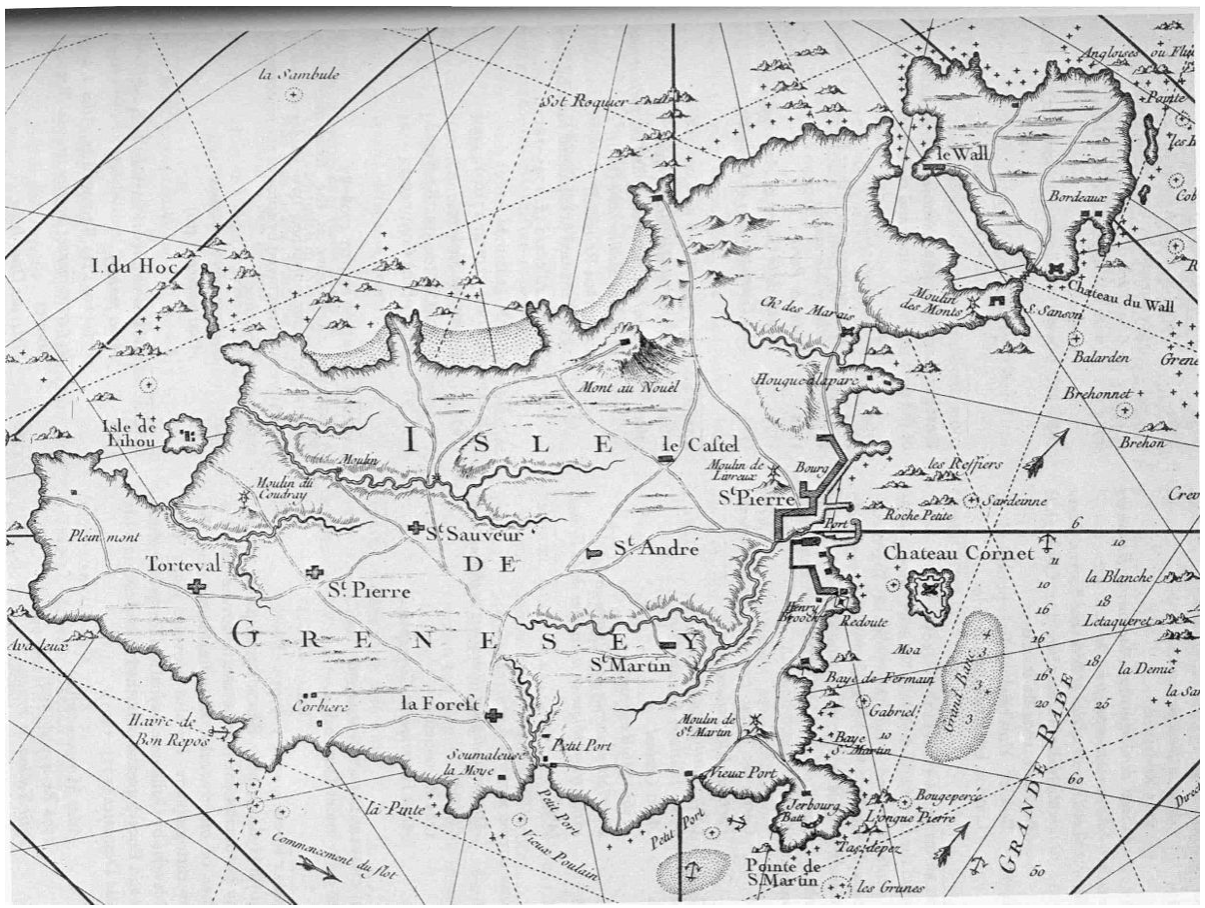
To operate as a privateer, a Guernsey shipowner needed a Letter of Marque from the Crown. This document was essentially a contract: it named the ship and captain, listed the armaments and crew, and authorized them to “set forth in a warlike manner” to capture enemy ships. For example, an actual surviving Letter of Marque from 1778 (issued during the American Revolutionary War when France allied with America) authorizes Captain Thomas Fallaize of Guernsey to command the 150-ton brig Surprise (14 guns, 70 men) as a privateer. It even names Guernsey merchants Henry Le Mesurier and Andrew Bonamy as the financiers backing that ship. Armed with such paperwork, a privateer ship could not be treated as a pirate (as long as it obeyed the rules).
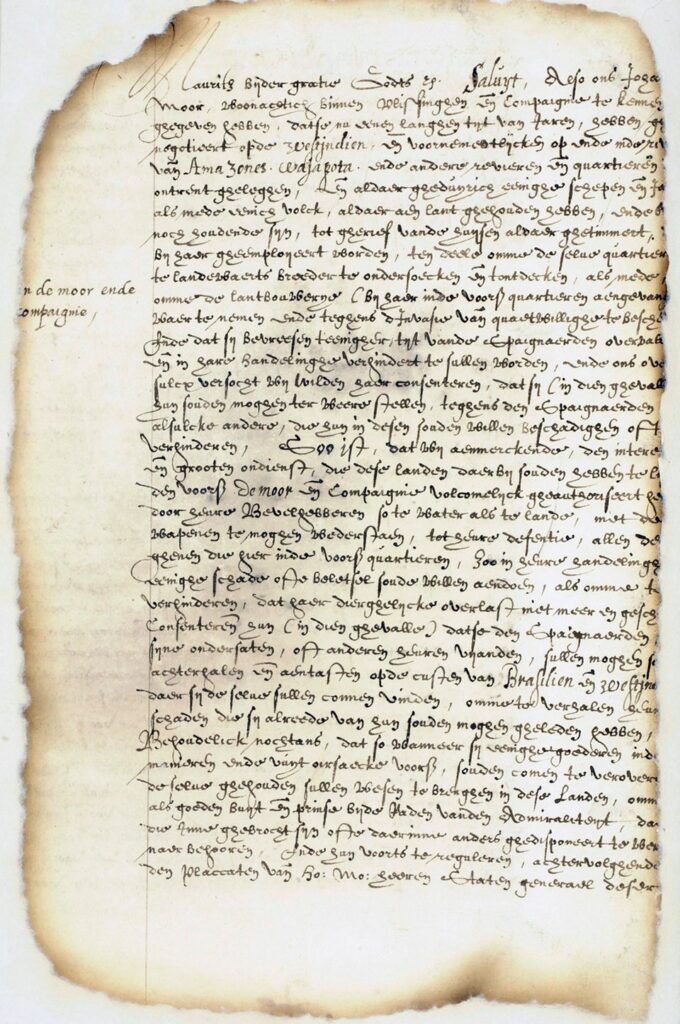
Many swashbuckling characters emerged from Guernsey’s privateering days. Their exploits became local legends. Here are a few of the most notable:
- Captain John Tupper (fl. 1690s): Often called “the greatest of the Guernsey privateers”, John Tupper made his mark not just by capturing ships but by heroic action. In May 1692, Tupper was sailing his small privateer sloop when he spotted the entire French fleet assembling near La Hogue for an invasion attempt. Realizing England was in peril, Tupper raced to warn the nearest Royal Navy commanders. His timely intelligence reached Admiral Russell and directly contributed to the Royal Navy intercepting and defeating the French fleet at the Battle of La Hogue (1692). This victory foiled the invasion. In gratitude, King William III awarded John Tupper a gold medal and chain, which he wore proudly. (That medal still existed in family hands generations later.) Tupper later continued privateering; though less is recorded of his specific prizes, he became an island hero for essentially “saving Britain” that day. In Guernsey’s Museum there’s a portrait of him wearing the medal.
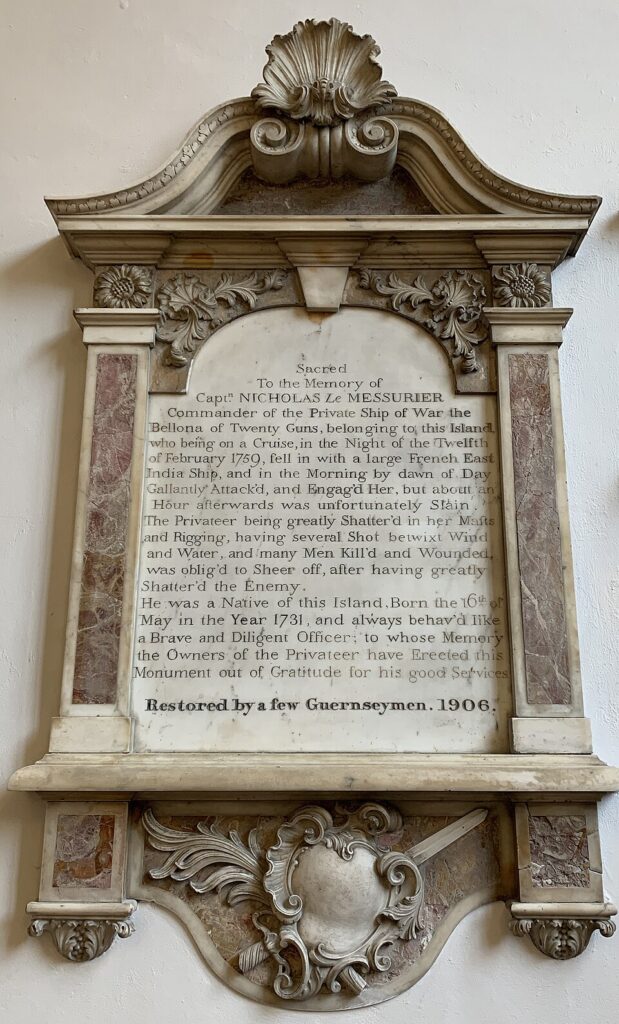
- Captain Nicholas Le Messurier (1731–1759): A young but celebrated privateer captain. Le Messurier commanded a 20-gun privateer ship named Bellona during the Seven Years’ War. In February 1759, off the Azores, he encountered a much larger French East Indiaman (an armed merchant ship) and engaged in a fierce battle. The fight raged for over an hour. Tragically, Captain Le Messurier was killed in action – Bellona was outgunned and had to break off, having inflicted damage but not captured the prize. Back in Guernsey, his bravery was so esteemed that the ship’s owners and his comrades erected a memorial plaque to him in the Town Church (St. Peter Port). That marble monument (still visible today) praises his “gallant conduct” and sacrifice. (Image: Memorial plaque to Capt. Nicholas Le Messurier in Town Church, Guernsey, 1759*)*. His story shows that while privateering was lucrative, it was also deadly – not all came home rich; some came home in coffins or not at all.
- The Privateer Families: Guernsey’s effort was truly a family-and-friends enterprise. Several wealthy local families bankrolled many voyages. The Dobrée, Priaulx, Le Mesurier, Le Marchant, and Carey families were prominent investors. They would outfit ships, often in partnership. For example, records show the Dobrée-Carey partnership financed a fleet of privateers in the mid-1700s. They took on the financial risk and were rewarded with big chunks of prize profits. However, this also led to interesting legal tangles. By 1709, so many Jurats (island judges) had relatives in the privateering business that it was hard to form an impartial court to judge prize disputes! The Privy Council in London had to intervene, ordering how to handle prize cases to avoid conflicts of interest. It was a sign that “everyone was related to everyone” in the island’s tight-knit community – and everyone had a stake in privateering.
- Famous Prizes: Among the hundreds of captures by Guernsey privateers, a few stand out for their value or drama. In 1793, just weeks after Britain declared war on Revolutionary France, the Guernsey privateer lugger Resolution (captained by William Le Lacheur) had an encounter that became the talk of the island. Resolution teamed up with a Jersey privateer to chase down the French East Indiaman St. Jean de Luz (sometimes called St. Jean de Lone) near the French coast. After a sharp fight, they seized it. The prize was enormous: the Indiaman was carrying silk, tea, spices, and other goods from Asia; in London it was valued around £150,000! That windfall made the lucky crew wealthy overnight and yielded a fortune for the ship’s backers. Le Lacheur continued to distinguish himself; in 1799, Resolution also captured a French privateer schooner, La Vigie, and retook a previously captured British merchant ship. Stories like those turned successful captains into local heroes, toasted in every tavern. At the same time, across the water, the French cursed the “maudits corsaires de Guernesey” (damned Guernsey privateers). Benjamin Franklin (then in France) grumbled in 1777 that Guernsey and Jersey privateers were “artful enemies” who plagued Allied shipping. The French nicknamed the Channel Islands “nids de guêpes” – nests of wasps – because their privateers stung so incessantly.
- French reprisals: The war at sea was a two-way street. French privateers (corsairs from St. Malo, Granville, etc.) also targeted Channel Island shipping. Guernsey had to be on guard too. There were instances of Guernsey privateers dueling French privateers. For example, in the 1740s Captain Jacques Ledos, a French corsair from Cherbourg, had a running fight with a privateer from Alderney – both sides took wounds. During the Napoleonic Wars, the tide turned harshly at times: in 1803–1805, powerful French naval squadrons swept the Channel, capturing many privateers. Jersey reportedly lost 42 privateer vessels and over 900 men captured in those years. Guernsey suffered losses as well – crews ended up as prisoners in French jails (like the infamous prison hulks at Brest). So while Guernsey enjoyed great success overall, it paid a price in blood and treasure when luck ran out.
Privateering wasn’t just about adventurous captains; it became an economic pillar of the island. It’s often said that Guernsey “went into the war business” – turning conflict into profit. And indeed, the influx of wealth from prizes transformed the economy.
The privateering era left a big imprint on Guernsey’s social fabric and identity. Here are a few key effects:
- Militarization of Daily Life: With so many men at sea as quasi-naval combatants, the island’s outlook became more martial. News of captures or losses was eagerly awaited and discussed in detail at pubs and markets. The return of a successful privateer into St Peter Port harbor – flags flying, perhaps towing a captured ship – was an event that could set the whole town cheering. Conversely, when an expedition went missing or prisoners’ letters arrived from France, most families knew someone who was affected. This wartime footing was almost constant from 1689 to 1815, save a few brief peace years. So an entire generation or two knew nothing else.
- Social Mobility and Tension: Privateering offered a rare chance for common sailors to strike it rich and climb the social ladder. A farm labourer’s son who signed on a privateer could come back a year later with £50, £100, maybe more – enough to buy land or start a business. Many did. Some successful captains or officers parlayed their prize earnings into gentility, buying estates or securing political office in the island. This blurred class lines a bit, which may have caused some friction with the established elite. But since the elite themselves were often financiers of privateers, a new interdependent class emerged – a maritime bourgeoisie blending merchants and mariners.
- Pride and Identity: Guernsey people grew proud of their privateers. They were defending the island and the realm in their own way. The British press occasionally lauded the Channel Islanders for their disproportionate contribution to the war at sea. There was a sense that tiny Guernsey “punches above its weight,” which islanders cherished. This pride is evident in things like the monuments to captains, or the way tales of daring sea fights entered local lore and ballads. To this day, Guernsey’s narrative of its history highlights these privateers as national heroes, akin to how Americans remember the Wild West era – a bit of lawlessness but a lot of romance.
- Population Effects: War always has demographic impacts. Some young men never returned – killed in battle or lost at sea. Others spent years as POWs. However, those who survived often married late (after a few cruises when they had a nest egg). We see in parish records a slightly skewed ratio of women to men during intense war periods (because many men were away). When war ended in 1815, a lot of seafaring men came home to stay, which may have led to a post-war mini baby-boom and also some unemployment or restlessness until they found new livelihoods.
- Moral Ambiguity: There’s no denying privateering was a legalized form of plunder. While celebrated, it also raised some eyebrows morally. Some Guernsey folk – especially religious ministers or those with business ties to France – might have disapproved of the cruelty inherent in commerce raiding. There are accounts of shipwrecked enemy sailors washing ashore and being rescued by islanders, suggesting empathy beyond the battlefield. Yet, overall, the community seemed to accept privateering as necessary and justified by war. If anything, by the late 1700s, Guernsey developed a bit of a “freewheeling” reputation – a place of smugglers and privateers who flouted rules in the pursuit of profit. This would later be cleaned up in the more straight-laced Victorian era, but in those days Guernsey was a rough-and-tumble frontier of the British Empire.
(Since many have been mentioned already in passing, here’s a quick recap and a couple more examples of Guernsey privateering in action.):
- The Swallow (1690s): John Tupper’s sloop, small but swift. Apart from the La Hogue episode, Swallow captured several French coastal traders early in the Nine Years’ War, helping prove Guernsey’s privateers’ worth. Tupper’s men once raided a Normandy harbor at night to cut out a French ship – daring commando stuff for the 1690s.
- Le Marlborough (1707): An oddly named Guernsey galley (perhaps humorously named after the famous Duke of Marlborough). In 1707, Le Marlborough seized a rich Dutch merchant ship mistakenly (the Dutch were allies!), leading to a complex prize court case. The fallout of this and similar mix-ups led to the 1709 reforms in prize courts I mentioned. Le Marlborough’s case taught privateers to be more careful identifying targets – oops!
- L’Entreprenante (1750s): A French privateer brig captured by Guernsey men and taken into island service. Renamed Enterprise, she served through the Seven Years’ War under a Guernsey crew, capturing at least four French prizes. It was common for captured enemy privateer ships to be bought by island investors and refitted as “new” British privateers – recycling the predator for a new master.
- The Young Phoenix (1778): A cutter that holds the local legend as the luckiest Guernsey privateer – in a single 18-month period during the American War, it captured 20 prizes without ever being caught or defeated. Her captain, Pierre Schaffer, retired a wealthy man. Islanders would say that ship had a charmed life (until peacetime, when it went back to being a trader and ironically wrecked in a storm – go figure!).
- La Dunkerquoise (1781): A French privateer that attacked the outskirts of St Peter Port one night, firing muskets at a harbor battery. In response, several Guernsey privateers in port, joined by an angry mob with shore guns, chased it off. This incident blurred the line between privateering and direct defense – showing the islanders’ readiness to turn their tools of trade into tools of defense instantly.
- The Speedwell (1812): By the War of 1812 against America, only a few Channel Island privateers were still active (privateering was starting to decline). The lugger Speedwell out of Guernsey earned fame by capturing an American merchant schooner off Spain in 1812. When told that the war with America had begun, Speedwell’s captain supposedly said, “Not dead yet, boys!” and immediately went hunting U.S. ships – showing that the old spirit lingered to the end.
All good (or bad) things come to an end. After 1815 (with Napoleon’s defeat at Waterloo), Europe entered a long peace. There was simply no wartime need for privateers. Guernsey’s fleet of privateering vessels mostly disbanded. Some ships were sold into merchant service; others just wore out and were scrapped. A few tried to carry on as smugglers, but without the cover of war that became riskier. The island turned its energy to more lawful trade, shipbuilding, and later, commercial endeavors like quarrying stone and growing tomatoes.
Today, you can still find tangible reminders of Guernsey’s privateering age:
- Historic Documents: The Priaulx Library in St. Peter Port holds original Letters of Marque, ship logs, and prize court records. For example, they have copies of a 1777 letter where American envoys complain about Guernsey privateers, and notebooks listing dozens of captures and their sale prices. In 2023, a genuine 1778 Letter of Marque issued to a Guernsey ship (Surprise) even came up for auction, complete with the royal seal and detailed descriptions. Such artifacts show the bureaucracy behind the swashbuckling. (Image suggestion: Scan of an actual 18th-century Letter of Marque for a Guernsey privateer, with fancy handwriting and stamps*)*.
- Architecture: The beautiful merchants’ houses along Cornet Street and Hauteville in St. Peter Port were often built or expanded in the late 1700s with privateering money. Candie House (now the Candie Museum) was owned by a successful privateer backer, for instance. These buildings, with their elegance, stand in contrast to earlier rustic farmhouses – a visible shift in wealth and style on the island.
- Memorials: We mentioned the Town Church plaque for Le Messurier. There’s also a gravestone at St Martin’s Parish churchyard for a Captain Philip Saumarez who died in a sea fight in 1720 – inscribed with a proud epitaph of his bravery. Castle Cornet, the fort guarding the harbor, has cannons on display that were captured from French privateers. In some cases, the guns that once armed a French ship ended up mounted on Guernsey’s defenses as trophies.
- Maritime Museum Exhibits: The Guernsey Museum at Candie and the Maritime Museum in Castle Cornet have exhibits on privateering. You can see things like cutlasses recovered from a privateer wreck, models of famous Guernsey ships, and the aforementioned John Tupper medal (a replica, I believe). They even have a recreated 18th-century privateer captain’s cabin you can step into, complete with maps and pistols. (Image suggestion: Photograph of a model of a Guernsey privateer lugger – showing a sleek two-masted vessel with perhaps 10 small cannon, on display at a museum*)*.
- Place Names: A few local spots carry nicknames harking back to those days – there’s a “Pirate’s Nest” café (playing on the wasp’s nest moniker), and some pubs like The Ship & Crown display old sailing ship paintings and signboards commemorating privateer captains.
In Conclusion, the story of Guernsey’s privateers is a remarkable chapter where a small island punched far above its weight in the global conflicts of the 18th century. It turned war into opportunity, produced heroes and wealth, and even after it ended, left an indelible imprint on the island’s character. Next time you stroll through St. Peter Port, imagine the harbor two centuries ago: filled with the cries of sailors, the creak of rigging, captured French ships being unloaded on the quays… and perhaps the quiet satisfaction of an island community that had mastered the art of privateering. It’s a history full of adventure, ingenuity, and a fair share of Guernsey grit.